Few pests produce a worse feeling than the roach that crosses the kitchen floor when you flip on the light at midnight. There's the disgust, obviously — but also the question it plants: if there's one, how many are there when the lights are off?
Take a breath. Cockroaches are revolting, but they're also among the best-understood pests there are, and the logic of getting rid of them is straightforward. Roaches need three things: water, food and shelter. The entire strategy is taking those three things away, then finishing the survivors with bait they carry home. Here's how that plays out in East Hampton homes.
The species you're likely to meet
German cockroach
Small — about half an inch — light brown with two dark stripes behind the head. This is the true indoor roach: it lives and breeds inside kitchens and bathrooms, close to warmth, water and food, and it multiplies fast. German roaches are the classic restaurant and apartment problem, but single-family homes get them too, often arriving in a grocery bag, a cardboard box, or a secondhand appliance. Small droppings that look like black pepper near hinges, drawer runners and appliance motors are their calling card.
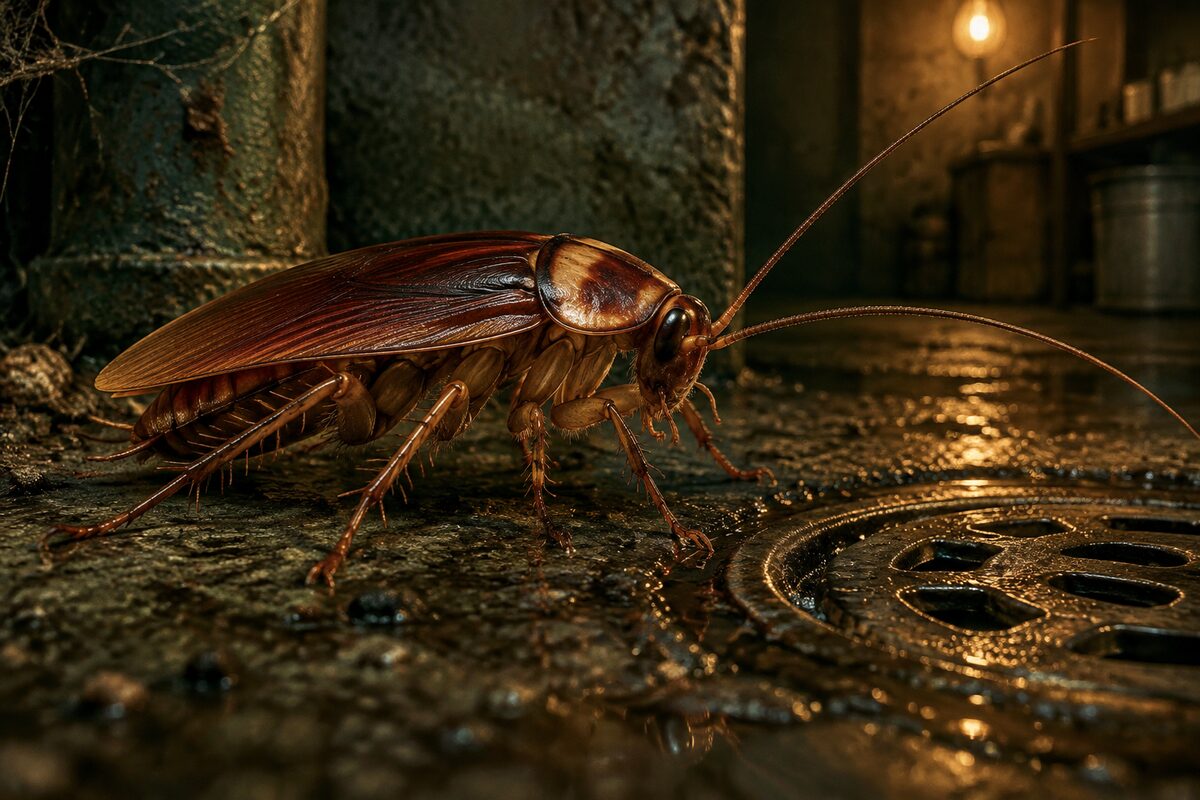
American cockroach
The big one — up to two inches, reddish-brown, and the source of most midnight heart attacks. American roaches favor damp, dark utility spaces: basements, floor drains, boiler rooms, crawl spaces, sewer connections. They wander up from there, especially in hot, wet stretches of summer. Seeing one large roach occasionally is often a basement traveler; seeing them regularly means the damp zone below is hosting a population.
Why they picked your house
It's almost never about cleanliness in the moral sense — immaculate homes get roaches. It's about infrastructure. Damp basements and crawl spaces in a coastal climate, a sweating pipe behind the washing machine, the gap around the drain line under the sink, a floor drain with a dry trap, grease film behind the stove, and — a local specialty — the summer rental that cycles new occupants, new groceries and new cardboard boxes every Saturday.
Roaches don't judge your housekeeping. They audit your plumbing.
The removal sequence
- Confirm the species. It changes everything about placement: German roaches get bait in the kitchen and bathroom voids; American roaches get attention in the basement and drains.
- Cut the water. Fix drips, dry the sink overnight, keep drain traps filled, run a dehumidifier in a damp basement. Water is the need roaches can least do without.
- Cut the food. Nightly kitchen reset: counters wiped, dishes done, floor swept, pet bowls emptied, grease film behind the stove cleaned. Food stored sealed, garbage out in a can that closes.
- Cut the shelter. Cardboard out (roaches nest in it), clutter off the floor, gaps around pipes and baseboards caulked, and the gap under the sink cabinet sealed.
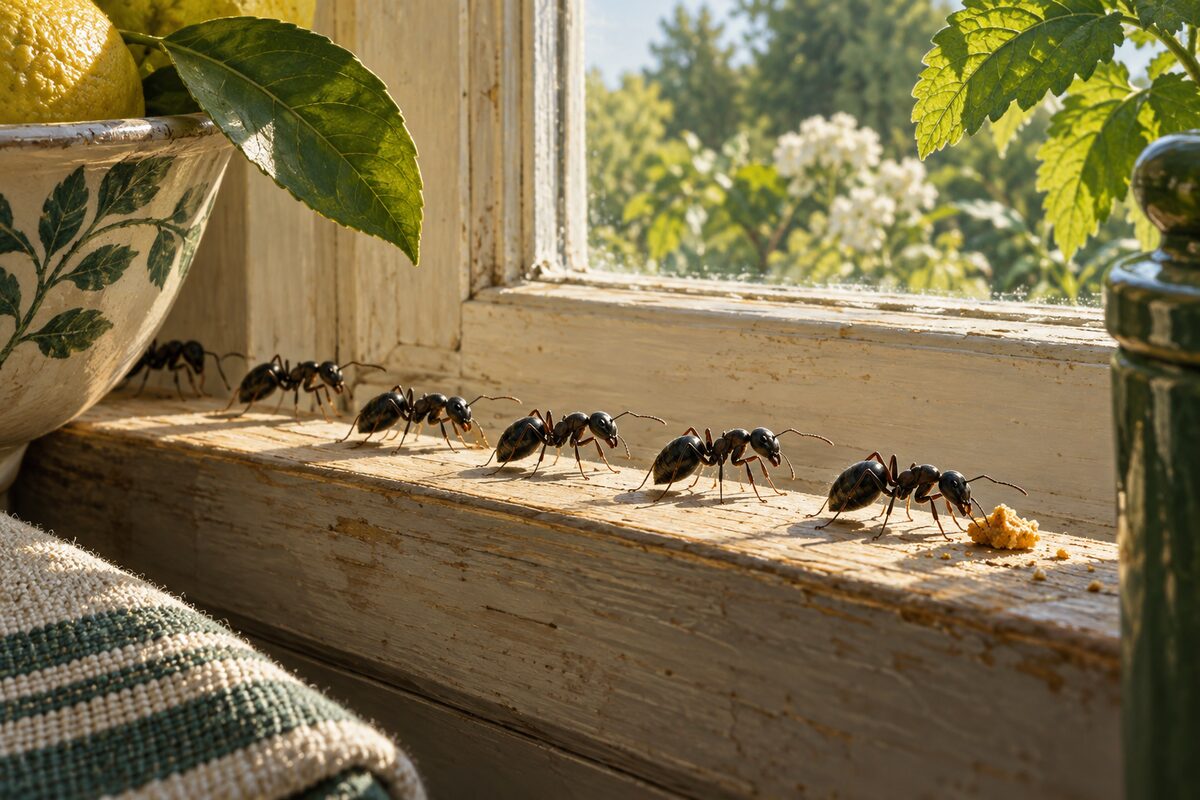
- Bait, don't bomb. Gel bait in small dabs placed in the cracks and corners where roaches travel — hinges, drawer runners, behind appliances, pipe penetrations. Roaches eat it and share it, and it reaches the harborages no spray can. Skip foggers entirely: they scatter roaches deeper into the structure and coat your counters for nothing. The principle is the same one behind bait-first ant control: let the pest carry the fix home.
- Monitor. A few glue traps in strategic corners tell you whether the population is falling and where the survivors are concentrated.
When it's beyond a weekend project
A German roach infestation that's had weeks to establish, activity in more than one room, roaches visible in daylight (a crowding sign), or a rental property that keeps getting re-infested — these are professional jobs. Effective work combines inspection, targeted baiting and dusting in voids, growth regulators, and follow-up visits timed to egg cycles. One-off spraying is how infestations become traditions. If that's where you are, look at cockroach control in East Hampton, NY from a local exterminator who starts with inspection and species identification.
The bottom line
The midnight roach feels like an emergency, but the fix is methodical: dry the house, starve the kitchen, clear the hiding places, bait the routes and watch the monitors. Do it properly and the population collapses within weeks. And the next time you flip on the light, the floor will be just a floor.
Common questions
Does one roach mean an infestation?
One large American roach near a basement drain may be a lone traveler — put out a glue trap and see what else shows up. One small German roach in the kitchen is more serious: they rarely live alone, and daytime sightings suggest a crowded harborage. Check hinges, drawer runners and appliance motors for pepper-like droppings.
Why did foggers make it worse?
Foggers mostly hit open air and exposed surfaces, not the cracks where roaches live. The irritation drives them deeper into walls and neighboring rooms, spreading the problem. Bait placed in their travel routes is slower but reaches the nest itself.
Can roaches come from the sewer?
American cockroaches do live in sewer and drain systems and can enter through dried-out floor drains and unused plumbing traps. Keeping traps filled with water — and adding a little mineral oil to slow evaporation in rarely used drains — blocks that route.
How long does proper elimination take?
With good sanitation and correctly placed bait, activity usually drops sharply within one to two weeks, with full control over the following weeks as hidden egg cases hatch and the nymphs reach the bait. German roach infestations that were established for months often need professional follow-up timed to those egg cycles.
Seeing them in more than one room?
An inspection finds the harborage, the species and the moisture source — and a treatment plan ends the cycle instead of pausing it.
Cockroach extermination in East Hampton