Every place has a pest that locals simply learn to live around. In East Hampton, it's the tick. The same oak woodland, deer herds and lush garden edges that define the landscape also make ticks a fact of everyday life here — and everyone who has pulled a tick off a dog, a child or themselves after an afternoon outside knows it.
This isn't a reason to stop enjoying the yard. It's a reason to understand how ticks actually use your property, because their behavior is predictable — and predictable problems can be designed against.
Meet the local cast
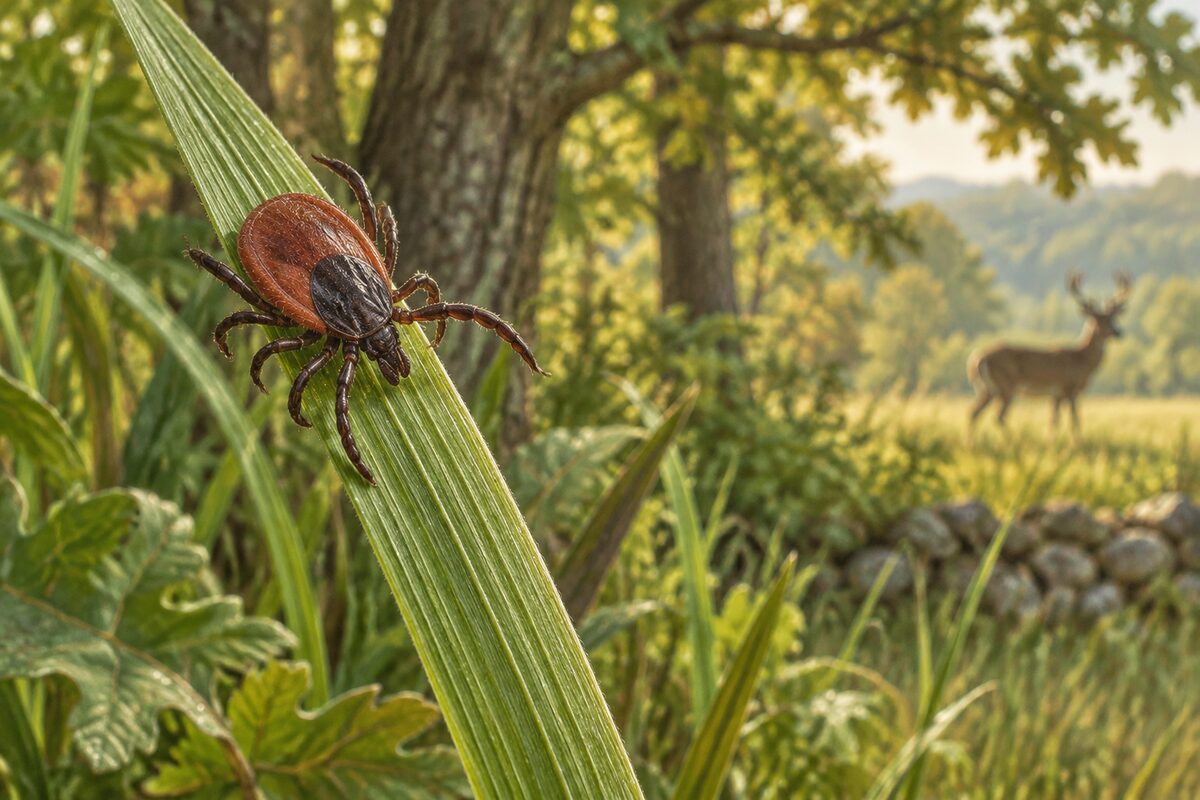
Two species matter most here. The black-legged tick — better known as the deer tick — is the small one, about the size of a sesame seed as an adult and poppy-seed small as a nymph. It's the species that transmits Lyme disease across the Northeast. The lone star tick is larger, faster-moving, and marked by a pale dot on the female's back. Both thrive wherever woods, deer and people overlap, which describes most of the East End.
It's worth knowing that ticks don't jump, fly or drop from trees. They "quest": climbing to the tip of a blade of grass or a low branch and holding out their front legs, waiting for something warm to brush past. Everything about managing them follows from that one behavior.
Where they actually wait in your yard
Not the middle of the lawn. Ticks dry out quickly in open sun, so they hold to the humid zones: the band where mowed grass meets woodland or tall meadow, the understory beneath shrubs, leaf litter, stone walls, woodpiles, and the shaded margins along paths and play areas. If you drew a map of your property's damp, shady edges, you'd have a map of its tick pressure.
The deer connection
Adult deer ticks feed and mate on deer, and East Hampton's deer move through residential yards nightly — browsing hostas, bedding in the back lot, crossing the lawn at dusk. Deer don't carry the Lyme bacteria themselves, but they shuttle adult ticks from property to property. The bacteria cycle through white-footed mice and chipmunks, which infect the larvae that become next year's nymphs — which is why the stone wall with the chipmunk family and the woodpile behind the shed matter as much as the tree line.
You will not get the deer out of East Hampton. You can absolutely get the ticks out of the twenty feet where your kids play.
Habitat changes that genuinely help
- Define the edge. A three-foot barrier of wood chips or gravel between lawn and woodland is uncomfortable, dry terrain that ticks avoid crossing. It also makes the boundary visible, which helps people respect it.
- Keep grass short in the living zone. Regular mowing lets sun and air reach the soil, which ticks hate.
- Move the play area. Swings and sandboxes belong in the sunny center of the yard, away from edges and leaf litter.
- Clear the leaf litter. Especially along borders, under shrubs and around stone walls, where nymphs overwinter.
- Stack firewood neatly and dry. Off the ground, in the sun, away from the house — tidy stacks shelter fewer mice.
- Rethink deer candy. Heavily browsed plantings invite nightly deer traffic. Resistant varieties and fencing change the pattern more than any repellent spray.
Personal habits, briefly
Habitat work reduces encounters; it doesn't end them. After time in brushy or grassy areas, the drill that locals swear by is simple: long pants and tucked socks for yard work in season, repellent where it makes sense, and a full tick check — scalp, behind ears, armpits, behind knees, waistband — after coming in. Showering within two hours of getting indoors has been shown to reduce the risk of Lyme disease. And finding an attached tick early genuinely matters: an infected tick generally has to stay attached for more than 24 hours to pass on Lyme bacteria, so keep fine-tipped tweezers in the bathroom drawer and pull with steady, even pressure.
What professional yard treatment adds
For properties with heavy pressure — dense tree lines, constant deer traffic, kids and dogs outdoors daily — habitat work alone often isn't enough, and that's where scheduled yard treatments come in. A professional program typically maps the property's high-risk zones (the edges, the understory, the walls and woodpiles), treats those zones on a seasonal schedule aligned to tick life stages, and adjusts as conditions change. The aim is fewer questing ticks where people actually spend time, not a sterile yard.
If you're weighing that step, read about tick control in East Hampton, NY — yard treatment and management designed around local properties, from seasonal cottages to year-round estates.
The bottom line
Ticks are the price of admission for living somewhere this green. But the price is negotiable. A defined yard edge, short grass in the play zone, clean borders, sensible planting and a household tick-check habit will cut most encounters — and for the yards where that's not enough, targeted professional treatment closes the gap. The goal was never to beat nature. It's to enjoy it without the souvenir.
Common questions
When is tick season in East Hampton?
Black-legged ticks can be active any time temperatures climb above freezing, but the risk peaks from April through July, when poppy-seed-sized nymphs are questing, and again in early spring and fall, when adults are most active. Nymphs are the highest-risk stage precisely because they're abundant and small enough to miss.
Do ticks live in the middle of a mowed lawn?
Rarely. Open, sunny, short grass is too dry for them. The pressure concentrates at the edges: where lawn meets woods or tall vegetation, in leaf litter, under shrubs, and along stone walls and shaded paths. Focus your effort there.
Will keeping deer out really reduce ticks?
It helps meaningfully. Adult deer ticks feed and mate on deer; less deer traffic means fewer fed females dropping off in your yard to lay eggs. Fencing and planting choices change deer patterns more reliably than anything else, though mice and chipmunks still move ticks around locally.
How do I remove a tick properly?
Use clean fine-tipped tweezers, grasp the tick as close to the skin as you can, and pull upward with steady, even pressure — no twisting or jerking, and skip the folklore (no petroleum jelly, heat or nail polish). Clean the bite area and your hands with soap and water or rubbing alcohol, seal the tick in a container or flush it, and note the date. If a rash or fever shows up in the weeks after, see a doctor and mention the bite.
Sources
The guidance in this article follows the U.S. Centers for Disease Control and Prevention:
- CDC — Preventing Tick Bites (yard barriers, tick checks, shower timing)
- CDC — What to Do After a Tick Bite (removal steps)
- CDC — How Lyme Disease Spreads (life stages, season, 24-hour attachment)
- CDC — About Ticks and Tickborne Disease (questing behavior)
Tired of the tick-check routine?
A professional yard program targets the edges and understory where ticks actually live, on a schedule matched to their life cycle.
Tick yard treatment in East Hampton